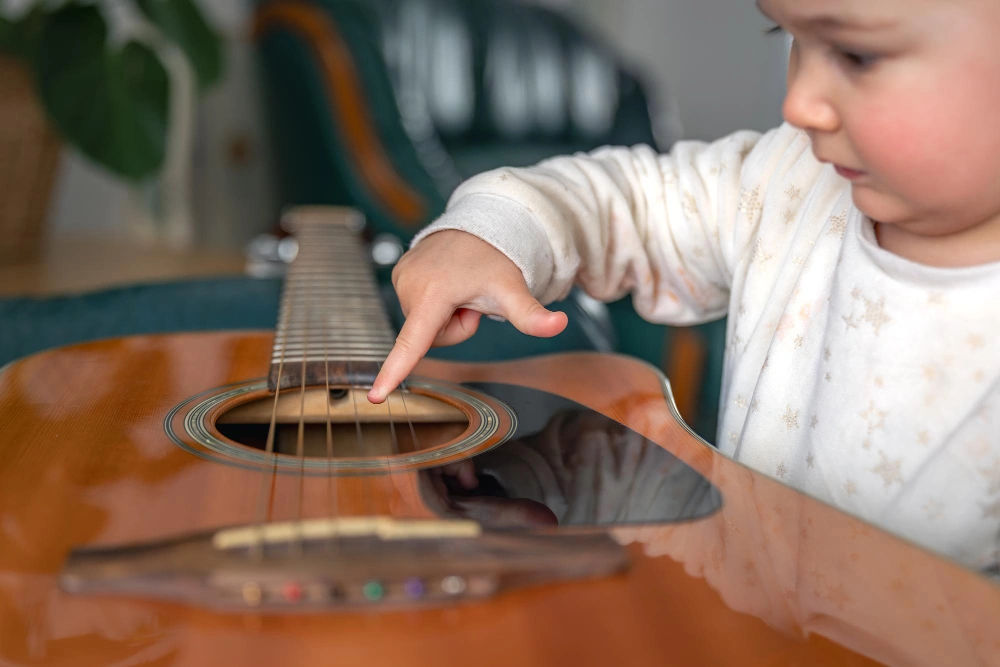




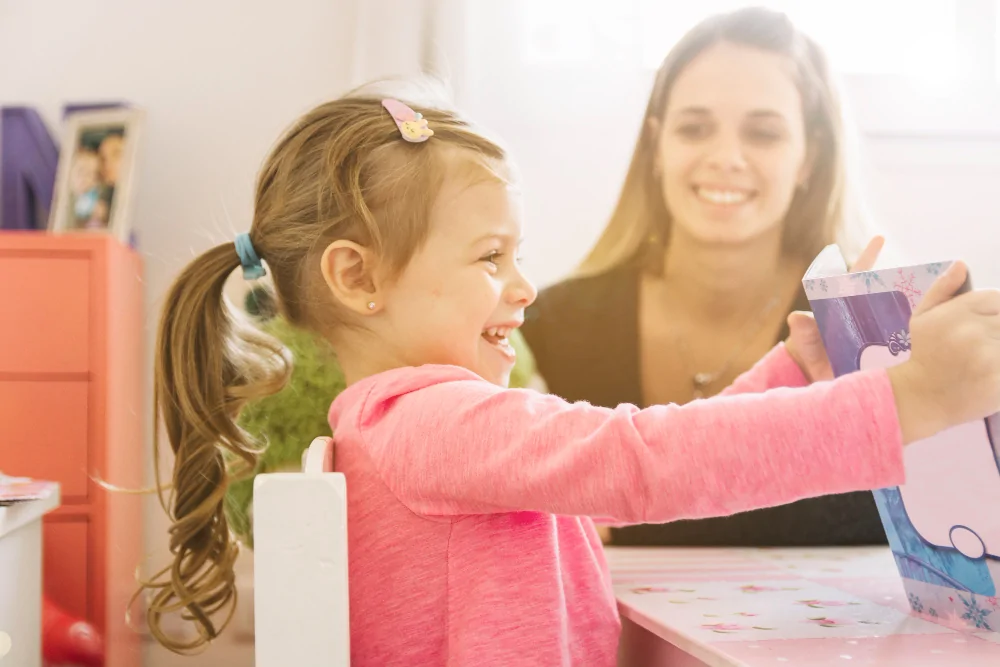


More and more research, as well as teachers’ everyday experience, shows that children learn a foreign language most naturally when they do not perceive it as “learning”. That is why modern preschools, such as Rubik Music School Private Music and Language Preschool, use language immersion – an approach that makes English a natural part of a child’s everyday life.
This method is calm, natural and adapted to the developmental needs of young children. There is no pressure, no tests and no sitting over textbooks. Instead, children learn through play, music, movement and everyday situations.
What exactly is language immersion?
Language immersion means “surrounding” a child with a foreign language. This means that English appears not only during scheduled classes, but also in ordinary everyday activities.
Children hear the language during:
- shared breakfast,
- play,
- music classes,
- walks,
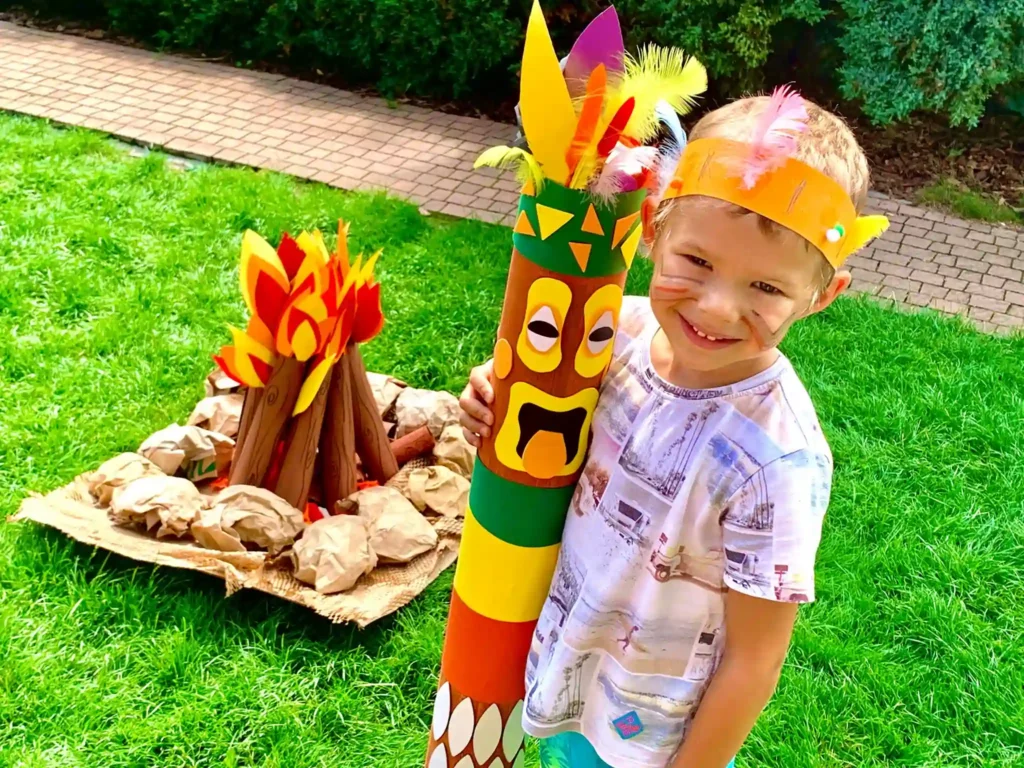
- arts and crafts,
- tidying up the classroom,
- daily routines.
The teacher speaks to the children in English in natural situations:
- “Let’s wash our hands”
- “Time to clean up”
- “Do you want some water?”
- “Great job!”
- “Can you help me?”
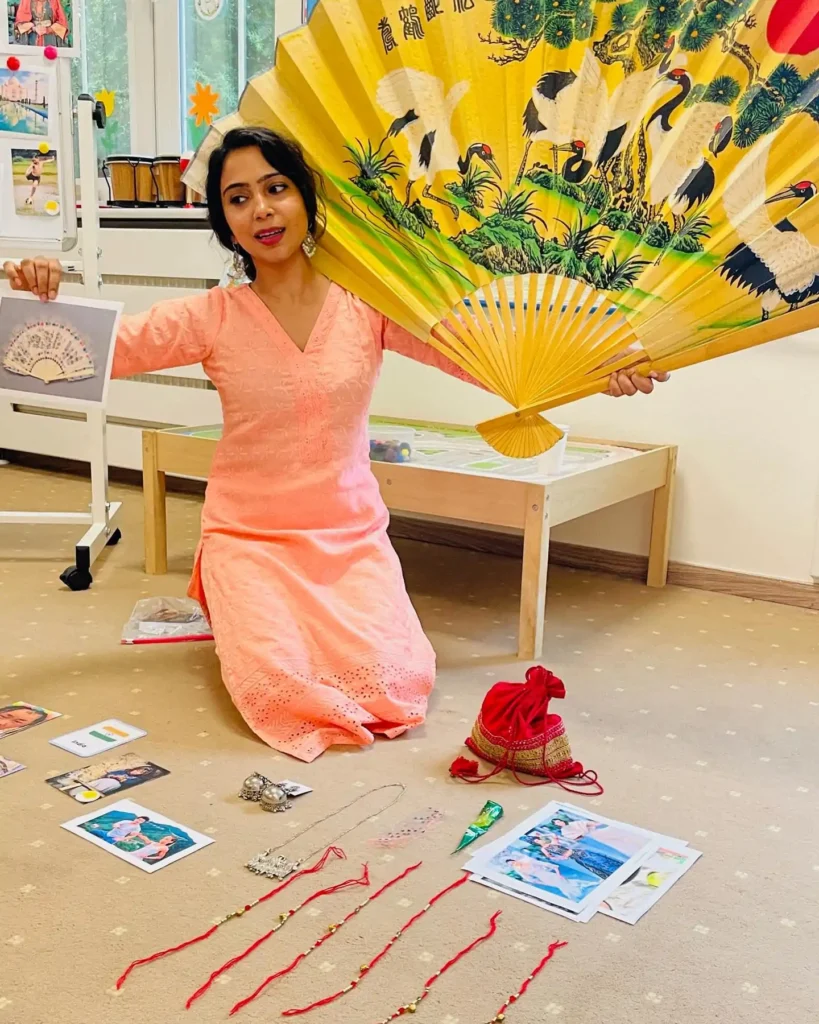
As a result, children do not learn individual words “by heart”, but begin to understand the language intuitively – in the same way they previously learned Polish.
This makes a huge difference compared with traditional methods based mainly on repeating vocabulary and completing exercises.
Why do young children learn languages faster?
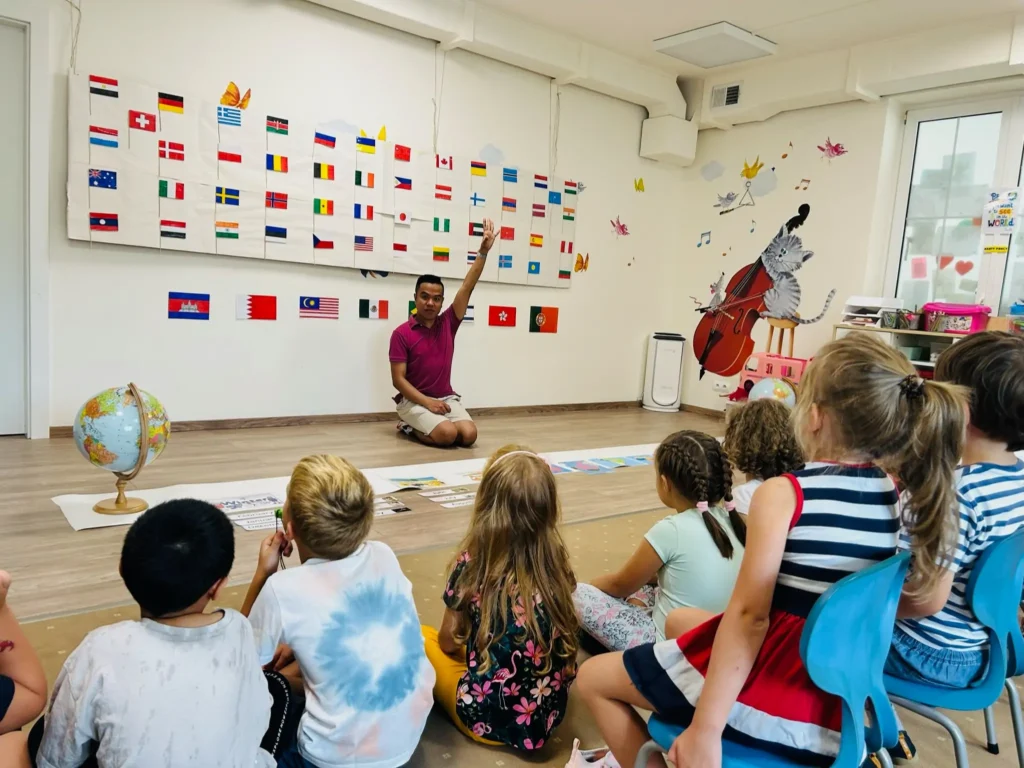
A young child’s brain is incredibly receptive. In the first years of life, children learn through observation, listening and imitation. They do not analyse grammar or language rules – they simply absorb the language from their surroundings.
That is why children:
- are not afraid to speak,
- find it easier to imitate the correct accent,
- become familiar with the rhythm and melody of the language more quickly,
- learn spontaneously and without stress.
The best results appear when contact with the language is regular and natural. One lesson a week is usually not enough. The situation is completely different in preschools that use language immersion, where English accompanies children every day.
Parents often notice that after a few months, children begin to use simple English phrases spontaneously at home. Sometimes these are individual words, sometimes short sentences, and sometimes even songs sung at breakfast or during play.
Learning through everyday activities – without pressure or assessment
One of the greatest advantages of language immersion is that children do not feel as if they are taking part in a “lesson”.
For young children, the most natural way to discover the world is through movement, play and hands-on experience. That is why, in a good music and language preschool, English appears during:
- dancing,
- singing,
- cooking,
- sensory play,
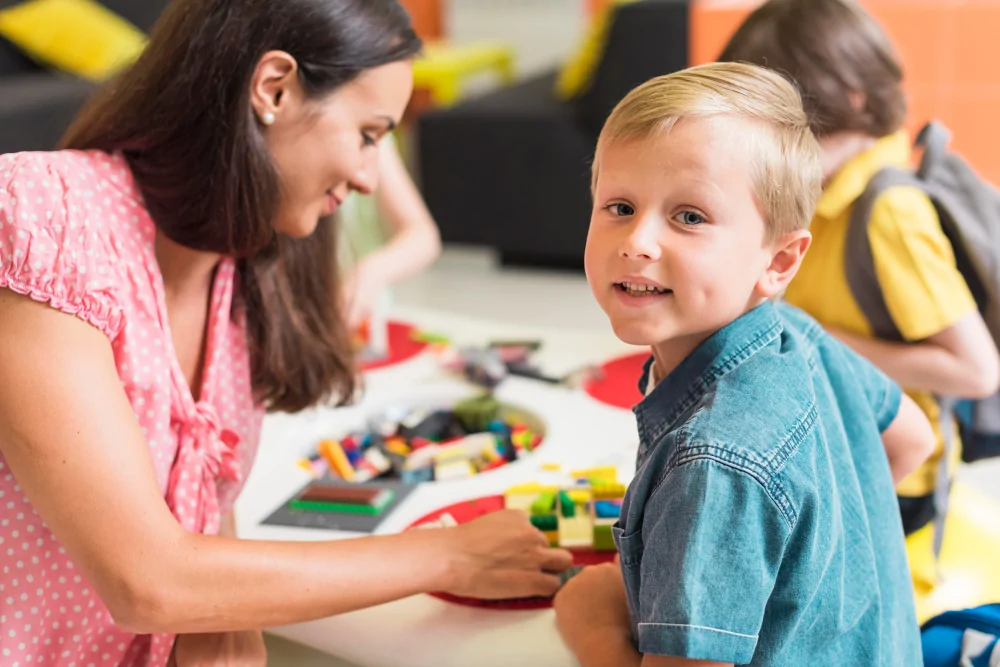
- building with blocks,
- rhythm activities,
- outdoor play.
Children hear and use the language in the context of emotions and real experiences. As a result, new words are remembered more easily.
For example:
- while washing their hands, children learn words connected with water and actions,
- during shared meals, they learn the names of fruit, vegetables and other foods,
- during movement games, they learn colours, numbers and simple instructions,
- during music classes, they become familiar with the rhythm and pronunciation of the language.
This is why children learning through immersion often understand much more than parents may realise.
Music and language – a unique combination
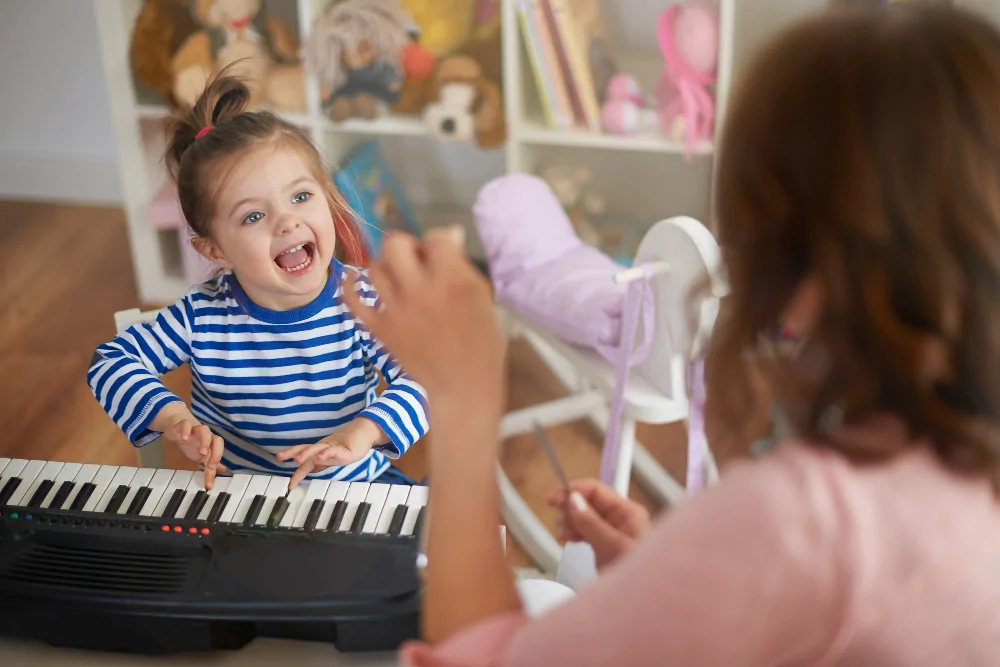
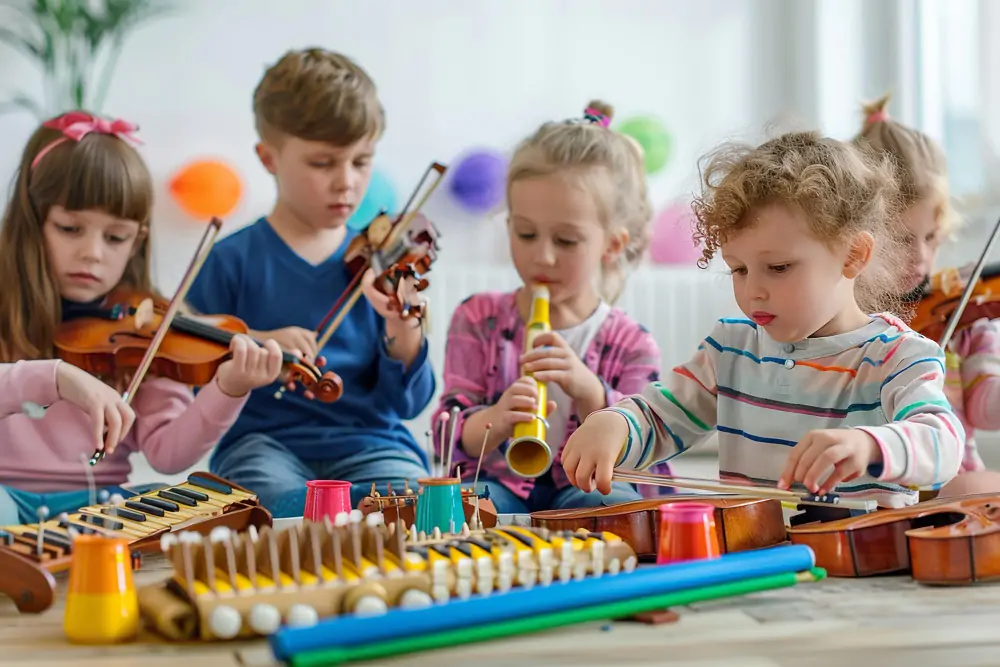
For young children, music plays a very important role in language learning. Rhythm, melody and repetition help children remember words and develop correct pronunciation.
This not only supports language skills, but also:
- strengthens memory,
- improves concentration,
- builds a sense of rhythm,
- boosts self-confidence,
- helps children express emotions.
Songs and rhymes also make language feel enjoyable, familiar and safe for children.
What is Jolly Phonics?
It is a phonics-based method, which means learning the sounds of a language. Children do not learn letters in the traditional way, but discover the sounds of individual phonemes through:
- movement,
- gestures,
- stories,
- songs,
- sensory play.
Each sound is connected with a specific movement and a characteristic melody. This helps children associate the sound with its written form more quickly.
Most importantly, learning takes place in an atmosphere of play. Young children do not spend long periods sitting over worksheets. Instead, they:
- jump,
- sing,
- use gestures,
- listen to stories,
- engage many senses at the same time.
This multisensory approach is exactly why children respond so well to this method.
Emotions play a huge role in language learning. A child learns best when they feel safe. This is especially important when they are exposed to a foreign language. If learning is associated with pressure, constant correction or stress, a child may begin to feel blocked from speaking.
That is why a good language preschool focuses above all on:
- relationships,
- a sense of security,
- positive emotions,
- a supportive atmosphere,
- free and natural communication.
In practice, this means that children are allowed to:
- speak imperfectly,
- mix languages,
- respond with gestures,
- need time to become familiar with the language.
And this is completely natural. In the immersion method, it is very important to build positive associations with English. As a result, children are happy to take part in activities and are not afraid to communicate.
Will the child mix up the languages?
This is one of the most common questions parents ask. In reality, mixing languages at the beginning is completely natural and shows that the child’s brain is actively working.
A child may:
- use English words in a Polish sentence,
- answer partly in Polish and partly in English,
- understand more than they can say.
This is a normal stage of language development. Over time, children begin to distinguish between the two languages more clearly and use them more consciously. The most important thing is not to put pressure on the child, but to allow them to develop at their own pace.
Language immersion in practice – what does a child’s day look like?
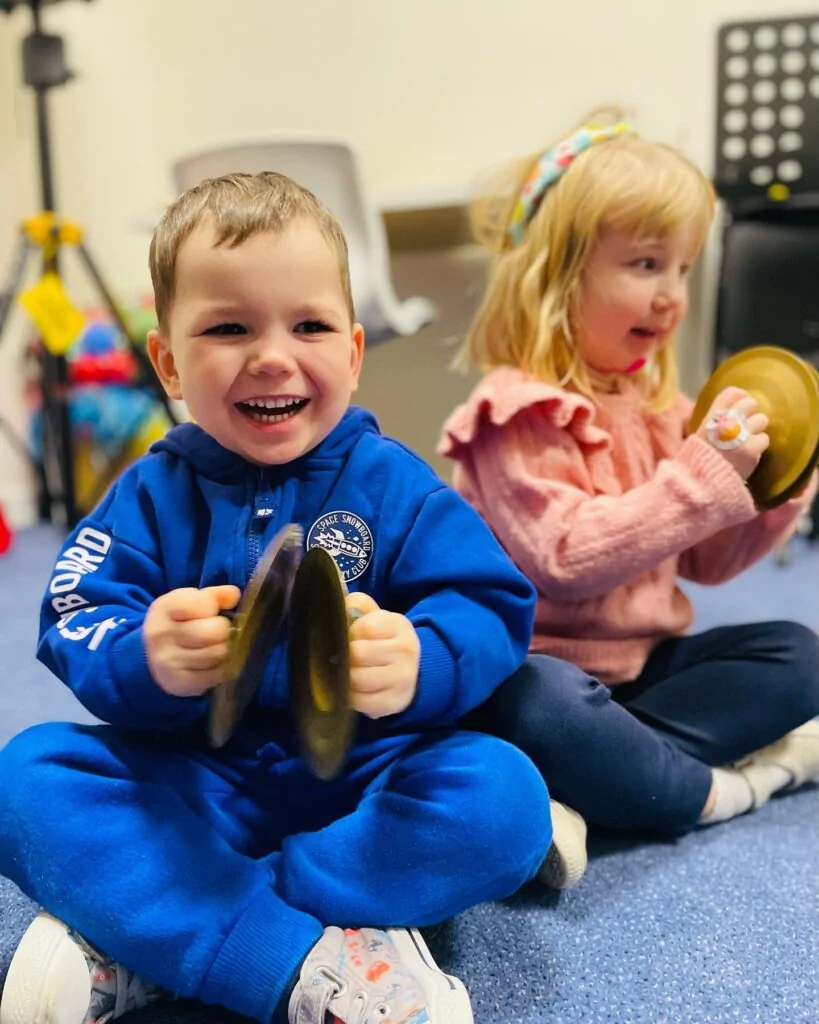
A morning at preschool may begin with a shared greeting in English. Children then take part in movement games, listen to songs or complete simple activities with an English-speaking teacher.
During meals, they hear the names of foods and phrases connected with everyday routines. During arts and crafts, children learn colours, shapes and the names of materials. On a walk, they become familiar with words related to weather and nature.
Children are not forced to answer in English all the time. What matters most is regular exposure to the language and building a natural need to communicate.
Why are parents choosing language preschools more and more often?
Parents looking for a preschool in Ochota, Warsaw, or in Konstancin-Jeziorna are increasingly paying attention not only to care, but also to the everyday development of their child’s skills.
When it comes to English, regularity and contact with a living language are extremely important. That is why many parents choose private music and language preschools that offer language immersion instead of single additional classes.
It is an investment not only in future language learning, but also in:
- a child’s openness,
- self-confidence,
- communication skills,
- ease of adapting to new situations,
- curiosity about the world.
Children who have natural contact with a foreign language from an early age often approach it with greater ease at later stages of education as well.
How to support your child at home?
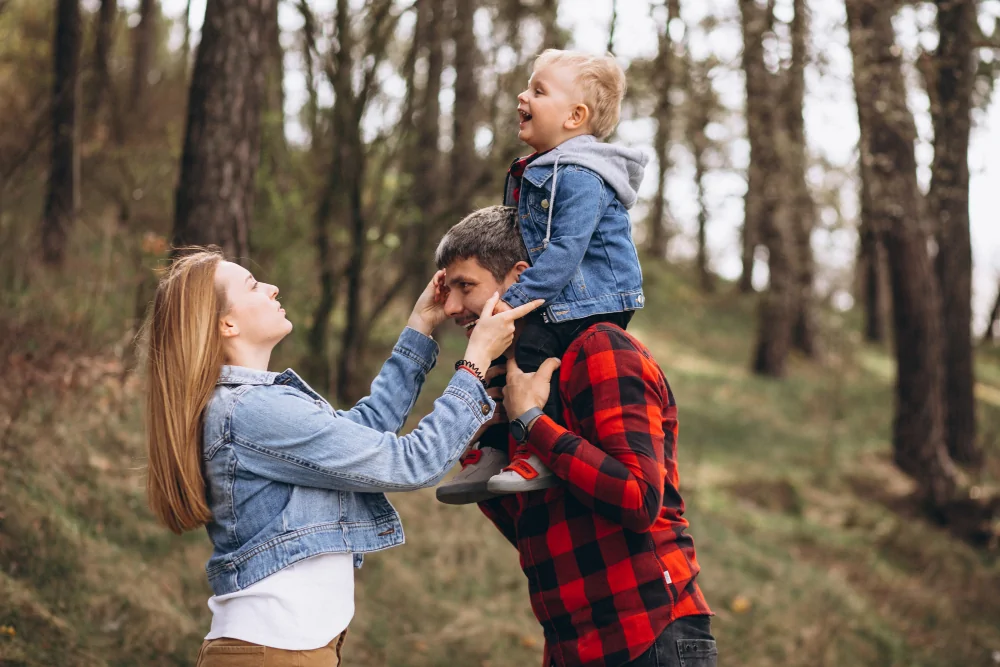
Parents do not need to speak English fluently to support their child’s language development.
The most important things are:
- a positive attitude,
- regular contact with the language,
- playing together.
You can:
- listen to English songs,
- read simple books,
- watch short cartoons in English,
- repeat everyday phrases,
- play games involving naming colours or objects.
It is best, however, to treat the language as a natural part of everyday life rather than an extra obligation. Children quickly sense adults’ emotions. When a parent shows that English can be interesting and enjoyable, the child usually approaches learning with greater openness.
English from the earliest years – calmly, naturally and with joy
Modern education is increasingly moving away from the idea of “learning at a desk” and focusing instead on experience, relationships and everyday practice. For young children, natural language immersion turns out to be one of the most effective ways to learn English.
Children do not need long hours of lessons or complicated exercises. They need:
- a safe atmosphere,
- engaged teachers,
- daily contact with the language,
- play,
- music,
- movement,
- positive emotions.