





At preschool age, music plays a particularly important role. It is not only about learning songs or taking part in rhythm classes. Music supports a child’s emotional, social, language and motor development in a very natural way – through play, movement and everyday experiences.
At Rubik Music School, music is present every day because children learn best when they feel free, safe and happy to discover the world around them.
At Rubik Music School, music is present every day because children learn best when they feel free, safe and happy to discover the world around them.
Adults often separate learning from play. For young children, these two worlds are not really separate at all. Preschoolers discover the world with their whole selves – through movement, emotions, observation, sounds and experiences.
This is exactly why music has such a strong impact on children. When a child sings, claps or moves to the rhythm, they are practising many different skills at the same time. They develop hearing, memory, concentration and motor coordination. They learn to respond to signals, observe other children and cooperate within a group.
But perhaps most importantly, they do all this completely naturally – without pressure or the feeling that they “have to learn something”.
Children are very quick to sense tension and adults’ expectations. When learning becomes too formal or based only on following instructions, many children lose their freedom and curiosity. Music works differently. It allows children to experience, try things out and discover the world at their own pace.
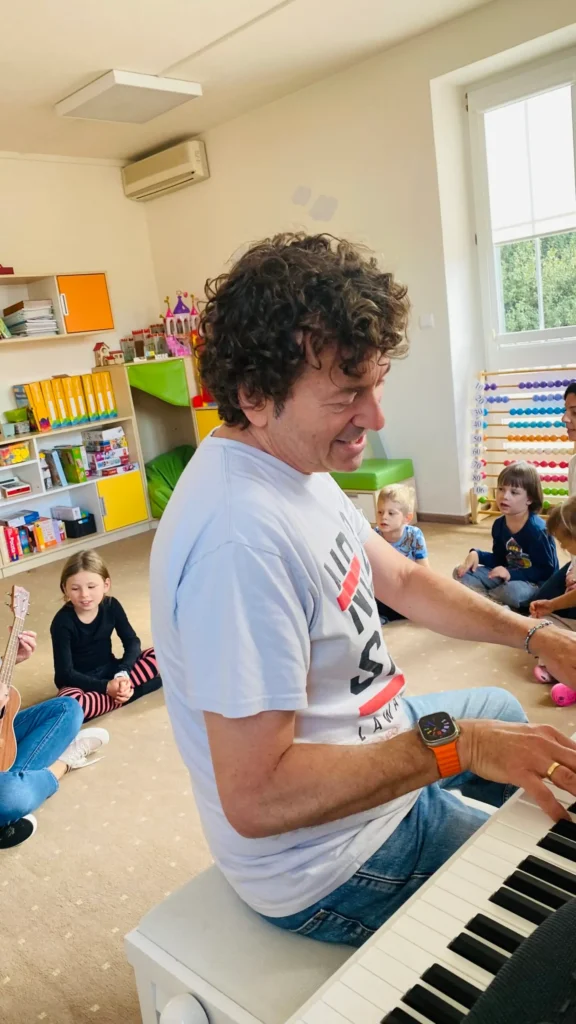
That is why music activities at preschool age look first and foremost like play. Children sing, move, respond to rhythm and share emotions together. At the same time, they develop very important skills they need in everyday life.
Music helps children express emotions
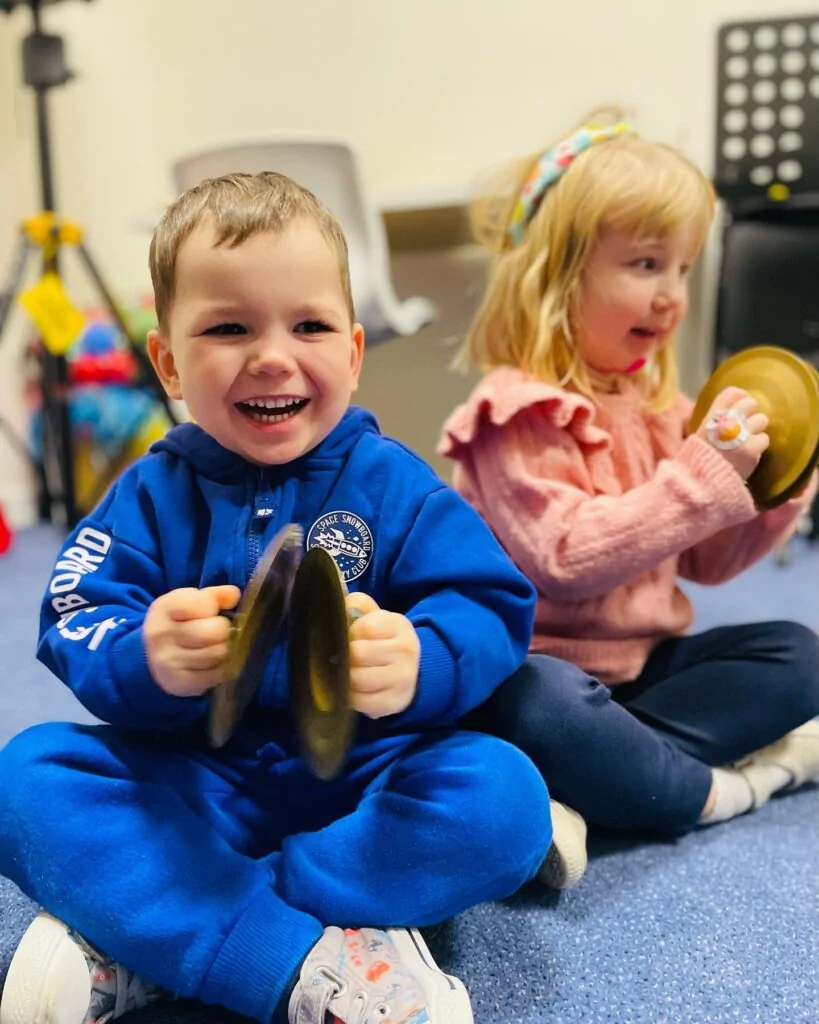
Young children are not always able to say exactly what they feel. Sometimes it is difficult for them to name sadness, frustration, tension or excitement. Very often, they express emotions through behaviour, movement or physical reactions.
Parents know well those moments when a tired or overstimulated preschooler suddenly becomes irritable, tearful or overly energetic. The child is not doing this “on purpose”. Their nervous system is simply still developing and learning how to regulate emotions.
Music can be a great source of support for children in such moments. Calm melodies help them slow down and regulate their breathing, while energetic songs allow them to release tension and excess energy.
In preschool, it is easy to see how important everyday music-related rituals can be. Singing together gives children a sense of predictability and security. It helps them move more smoothly between different activities and creates a calmer atmosphere in the group.
For many children, music becomes something familiar and safe – a part of everyday life that helps them find their way, even in new or stressful situations.
Why do children remember songs so easily?
Many parents know the situation when a child remembers an entire song they heard a few days earlier, yet finds it difficult to recall a simple piece of information from an everyday conversation.
This is no coincidence. Rhythm and melody strongly support memory. Children remember words more easily when they are connected with music, movement and emotions.
This is why music supports speech development and foreign language learning so well. Songs help children become familiar with the sound of a language, practise pronunciation and remember new words without stress or pressure.
A child does not feel that they are “learning English”. They are simply singing, playing and repeating words that appear naturally during everyday activities.
In music and language preschools, contact with language happens in exactly this way – through play, singing and movement. As a result, children open up to communication more quickly and become familiar with a new language without tension.
Importantly, music supports not only vocabulary development, but also listening skills. Children learn to notice the rhythm of speech, intonation and the sounds of the language. This is a very important stage in later learning to read and write.
Music builds self-confidence
Every child develops at their own pace. Some children quickly find their place in the group and willingly take part in new activities. Others need more time to feel safe and comfortable.
Music often helps children overcome shyness. Singing together and taking part in rhythm games allow children to feel part of the group without the need for competition or assessment.
Children learn to:
- listen to others,
- cooperate,
- wait for their turn,
- respond to signals,
- express themselves in a safe way.
For many young children, music also becomes a way to build courage and a sense of agency. Even very shy children often gradually open up during shared music activities.
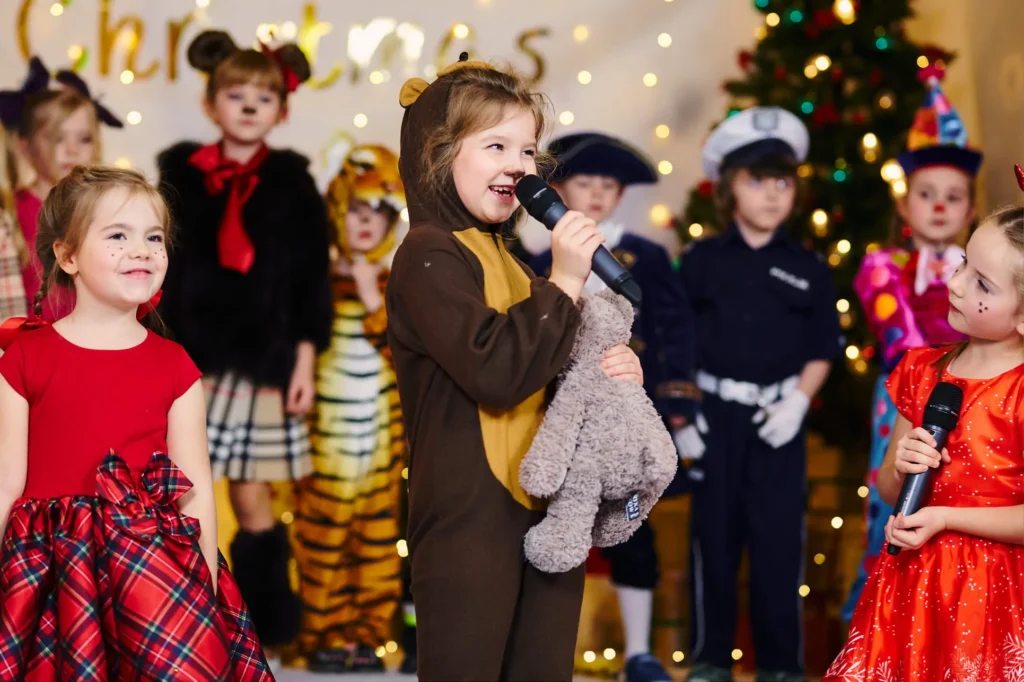
This is especially important at preschool age, when children are still learning how to function in a group and build relationships with their peers.
Making music together gives children a sense of belonging. It shows them that they can act together, listen to one another and create something as a group – without the pressure of having to be “the best”.
Movement and rhythm are simply essential for children
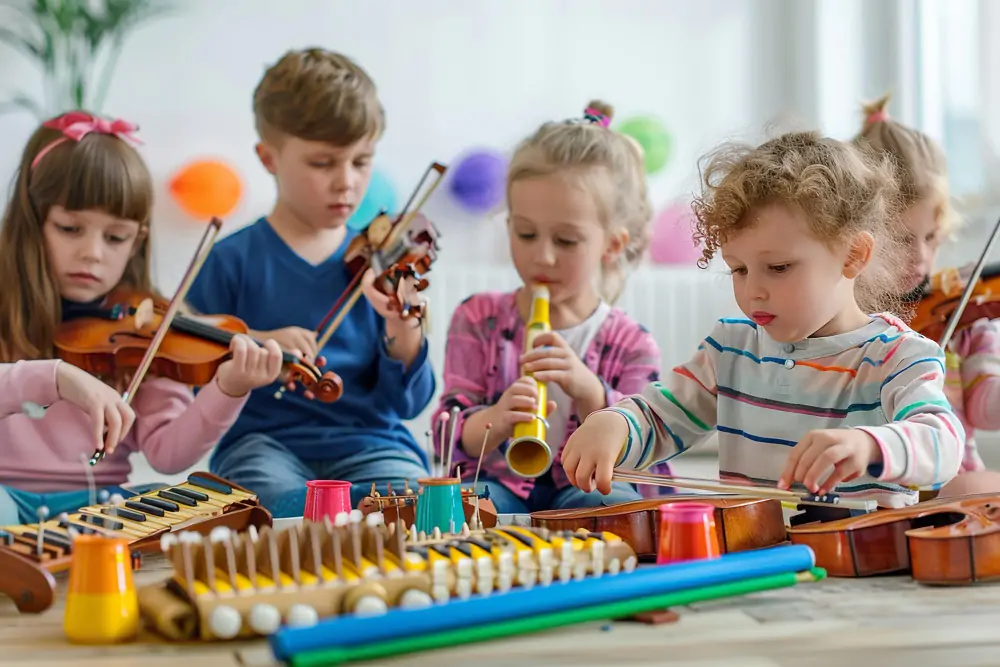
Preschoolers have a strong need for movement. It is a natural part of their development. Children discover the world with their whole bodies — they run, jump, dance and constantly explore what they are capable of.
For adults, a child’s excess energy can sometimes feel tiring, but from a developmental perspective, it is very important. Movement supports the development of the nervous system, concentration and coordination.
Music responds to this need beautifully. Rhythm games help children develop balance, body awareness and motor coordination.
But there is something equally important – movement combined with music brings children great joy. And positive emotions are one of the key elements of effective learning and healthy development.
Children learn best when they are emotionally engaged and simply having fun.
Music helps build relationships
Singing together and taking part in music activities have another very important role – they help children build relationships with others.
Preschool-aged children are still learning how to cooperate, communicate and understand other people’s emotions. This is a long process that requires many everyday experiences.
During shared music activities, children observe one another, respond to others’ emotions and learn how to function within a group. They often find it easier to connect with others through singing or dancing than through ordinary conversation.
Music also helps build a sense of community. A shared song or rhythm game makes children feel part of the group and helps them settle into preschool life more quickly.
Does every child need to have musical talent?
Parents often wonder whether their child “has an ear for music” or musical abilities. At preschool age, however, skills and perfection are not what matters most.
The greatest value lies in contact with music itself.
Children do not need to sing perfectly or repeat a rhythm flawlessly. They need space to experiment, move, play and express emotions.
Music supports the development of every child – whether they go on to play an instrument in the future or simply keep positive memories connected with singing and creative activity.
It is worth remembering that children very quickly adopt adults’ attitudes. If music is associated only with assessment and “talent”, many children begin to withdraw. But when it becomes a space for play and free expression, children willingly take part and gain great joy from it.
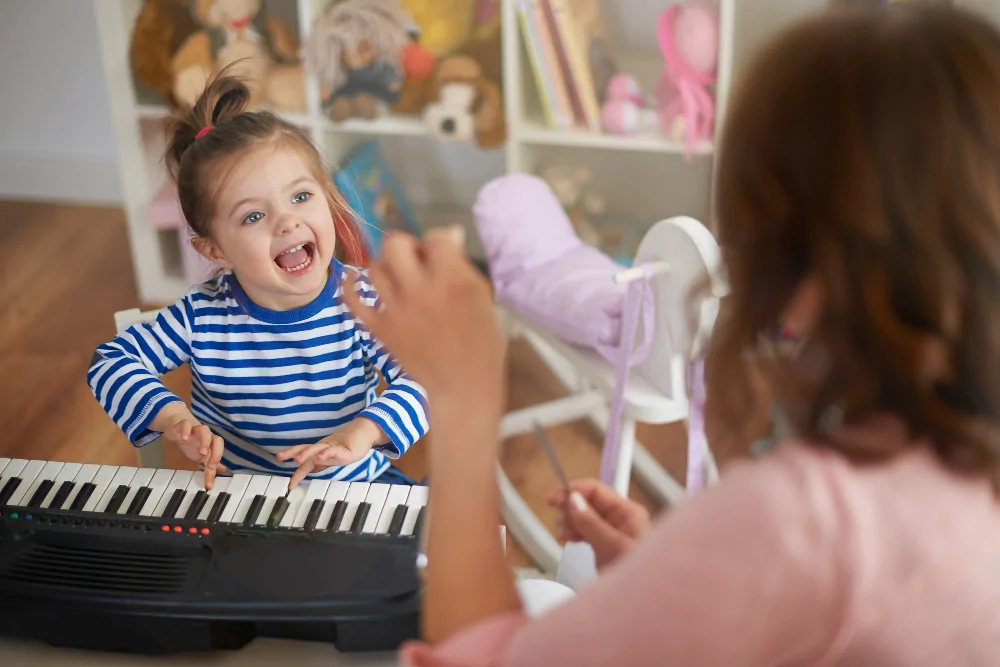
Music can also support your child at home
You do not need to be a musician or have specialist knowledge to support your child through music every day.
Sometimes, all it takes is:
- singing together in the car,
- lullabies before bedtime,
- dancing in the living room,
- rhythm games,
- calm music to help your child unwind after an intense day.
For a child, what matters most is shared presence and the positive emotions connected with this time together.
Many parents notice that music also helps children regulate their emotions at home – calm down after a difficult day, move more easily through evening routines or simply release tension.
Learning through play stays with a child for longer
Children learn best when they are curious, engaged and feel safe. This is why music is such an important part of preschool education.
Through singing, rhythm and shared activities, children develop many skills at the same time – often without even realising that they are learning.
At Rubik Music School, music is part of children’s everyday life not to create little musicians at all costs, but to support their development in a calm, natural and joyful way.
Because childhood should not be only a time of learning and completing one task after another. Above all, it should be a time of discovering the world with curiosity, freedom and a sense of security.
And music beautifully helps children do exactly that – grow, build relationships and express themselves in the most natural way.